Residents Evacuated After Overnight Apartment Fire Prompts Second-Alarm Response Near UT Austin’s West Campus
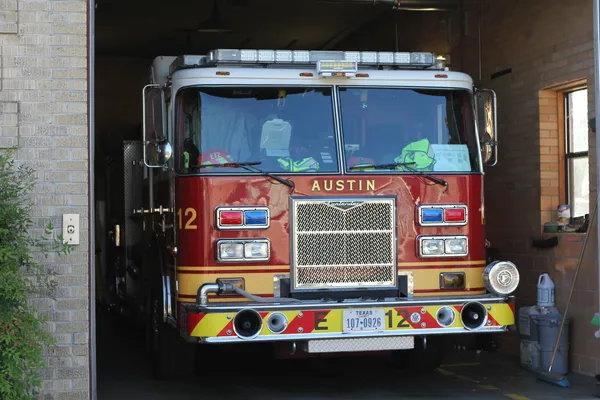
Fire crews respond to smoke conditions at West Campus student housing complex
Residents at a high-rise student housing complex near the University of Texas at Austin were evacuated after an overnight fire that prompted a significant emergency response and a second-alarm escalation. The incident occurred on Sunday, February 8, 2026, at Regents West at 26th, a residential building at 900 W. 26th Street in West Campus, a densely populated neighborhood where many UT Austin students live.
Firefighters were dispatched overnight and encountered smoke conditions in the building, with reports of smoke collecting on an upper floor. The response was upgraded to a second alarm as crews worked to locate the source, control smoke movement, and ensure the building was safe for occupants.
Origin traced to dumpster; smoke migrated through building systems
Available incident details indicate the fire originated in a dumpster outside the building. Smoke then traveled upward through a trash-chute pathway and into interior areas, contributing to smoke conditions on higher floors. In high-rise buildings, trash-chute and mechanical shafts can create vertical routes for smoke migration, requiring rapid ventilation actions and careful checks of multiple floors even when the primary fire is external.
During operations, residents were directed out of the building while firefighters worked. Public accounts from the scene also describe confusion about whether occupants should shelter in place or evacuate as the response unfolded. In multi-story residential incidents, instructions may change as crews confirm where smoke is present and whether stairwells and corridors remain tenable for safe egress.
Immediate priorities: life safety, smoke control, and re-entry decisions
Evacuations in West Campus are operationally complex because many buildings house large numbers of residents and are closely spaced along narrow streets. A second-alarm assignment typically reflects the need for additional personnel and equipment to manage multiple tasks at once, including:
- search and accountability checks for residents who may still be inside;
- ventilation and smoke removal across affected floors;
- assessment of fire extension into chutes, walls, or utility spaces;
- coordination for traffic control and staging in a congested area.
In high-rise responses, smoke conditions can drive decisions as much as visible flames, particularly when smoke spreads beyond the point of origin.
What remains unknown
As of the latest available incident descriptions, authorities had not publicly confirmed the cause of the dumpster fire, whether any residents were treated for smoke exposure, or the extent of property impact inside the building. Re-entry timing typically depends on air-quality conditions, confirmation that smoke has been cleared from common areas, and verification that fire has not extended into building infrastructure.
The incident adds to ongoing public-safety scrutiny in West Campus, where high residential density, late-night activity, and building-system design can complicate emergency response even when the initiating fire begins outside the living spaces.