Long security lines spill outside Austin-Bergstrom airport as spring travel season intensifies Friday morning
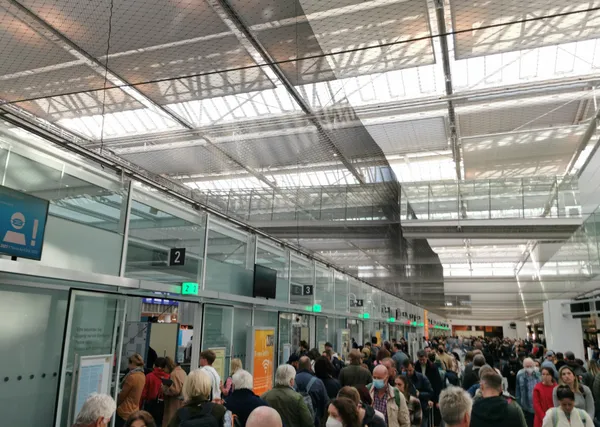
Security queues extended beyond the terminal during an early-morning surge at AUS
Passengers departing Austin-Bergstrom International Airport (AUS) encountered unusually long security lines Friday morning, with queues extending beyond the terminal doors during the early peak departure window. The crowding affected the primary screening area in the Barbara Jordan Terminal as travelers arrived for morning flights.
The backups came at the start of a high-demand period for Austin air travel, as spring break schedules overlap with the city’s major March events and seasonal visitor traffic. Airport officials have publicly flagged March as a month that typically brings sustained increases in passenger volume, particularly on mornings when multiple outbound banks of flights depart within a short span.
Why lines can grow quickly at AUS
Operationally, security lines at AUS are sensitive to short-term shifts in demand because passenger flow concentrates around a limited number of screening checkpoints and early morning departures. When several conditions stack up—high passenger counts, clustered flight schedules, and slower-than-normal screening throughput—queues can expand from the interior lobby into public areas in a matter of minutes.
In Austin, March travel patterns are also shaped by event-driven peaks, when visitors leave the city at similar times following conferences, festivals, or holiday breaks. These surges can be amplified on Fridays, which are commonly heavy departure days.
Construction and capacity constraints remain part of the backdrop
The airport is in the middle of a multi-year expansion and modernization effort intended to add space and improve passenger circulation, including projects designed to increase capacity around ticketing and security queuing areas. Several improvements are scheduled to come online in phases, but near-term travel demand has continued to press existing facilities during peak periods.
AUS has also outlined operational changes tied to its broader redevelopment timeline, including planned transitions affecting certain facilities later in March 2026. Airport leadership has described the coming weeks as a period requiring additional planning by travelers because demand is expected to remain elevated through the end of the month.
What travelers should do when lines extend outside
Follow airline guidance on arrival times for bag drop and check-in, then add additional buffer time during peak morning windows.
Use mobile boarding passes when possible and complete check-in before arriving to reduce time spent in the ticketing hall.
Pack with screening requirements in mind to avoid secondary checks that can slow individual lanes.
Monitor airport advisories and airline notifications for day-of operational updates, including checkpoint changes.
When screening demand concentrates into a short period, queues can expand beyond the terminal footprint even without widespread flight disruptions.
Airport officials have urged travelers to plan for heavier-than-normal crowds through the remainder of March, particularly on mornings and weekends, when departures and event-related travel are most likely to overlap.