Hole in the Wall, a longtime Austin live-music bar near UT, is being sold to new owners
A landmark venue enters a new chapter amid shifting economics on Guadalupe Street
Hole in the Wall, the compact live-music bar on Guadalupe Street across from the University of Texas campus, is being sold to new owners, marking another ownership transition for one of Austin’s longest-running small venues. The bar has operated for decades on the Drag, a corridor where rising commercial rents and redevelopment pressures have repeatedly challenged legacy businesses.
The sale comes after a period in which the venue’s operating outlook was shaped as much by real estate dynamics as by ticket and bar revenue. In August 2023, the business secured a long-term lease structure described at the time as an initial 10-year term with two additional five-year extensions, supported by city funding targeted at preserving culturally significant music venues. The arrangement was designed to stabilize occupancy costs and enable physical improvements, including work tied to performance and back-of-house areas.
What is known about the venue’s footprint and role
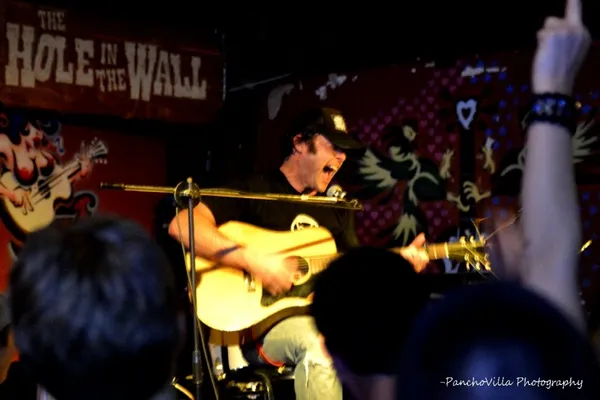
Hole in the Wall is widely identified as a high-frequency stage for local and touring acts, with programming that can range from early evening sets to late-night shows. Its small front room and window-facing stage have made live performance visible from the sidewalk—an unusual design feature that has helped define the venue’s street presence.
- Location: 2538 Guadalupe St., in West Campus, immediately adjacent to the Drag’s highest-foot-traffic blocks.
- Format: bar-and-music-venue operations, with additional space historically discussed for complementary hospitality uses.
- History: multiple ownership changes over time, including major transitions around the late 1990s and 2000s, followed by ownership under Will Tanner beginning in 2008.
Why a sale matters in the current market
For small music rooms, ownership transitions can affect booking strategy, staffing, capital improvements, and long-term commitments to live programming. They also matter because the Drag’s commercial market has supported high lease-rate expectations for comparable spaces, increasing the value of predictable tenancy and tenant improvements for any operator.
In recent years, public initiatives in Austin have explicitly treated certain venues as cultural assets, pairing lease stabilization and capital support with expectations that spaces remain active and publicly accessible.
What to watch next
Key questions will center on continuity: whether live music remains the venue’s primary use, whether the existing management model changes, and how the new owners approach capital upgrades and day-to-day operations. Separately, the relationship between any new ownership group and the venue’s long-term lease terms will likely determine how much operational risk the business carries in the years ahead.
For patrons and musicians, the near-term significance is practical: the sale introduces a new decision-maker into a venue whose survival has repeatedly depended on balancing cultural identity with the economics of a rapidly evolving corridor.