Guatemalan smuggling organizer sentenced to 30 years as federal cases highlight Austin’s role in networks
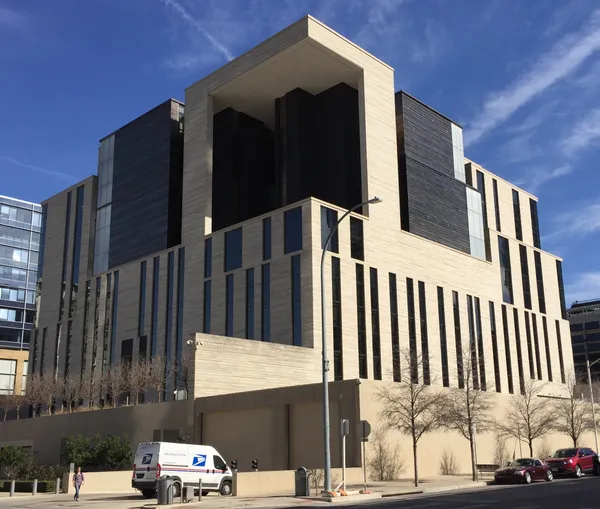
A 30-year federal sentence tied to an Austin-linked smuggling pipeline
A Guatemalan national identified in federal court records as Lopez Mateo Mateo, also known as “Bud Light,” was sentenced to 30 years in prison in a Western District of Texas case targeting an international human smuggling conspiracy that operated through Texas, including the Austin area. The prosecution centered on a Guatemala-based network that moved migrants through Mexico and into the United States for profit, using coordinators, drivers, and holding locations inside Texas.
The sentencing, imposed in November 2023, was part of a larger case in which three additional defendants extradited from Guatemala received prison terms ranging from roughly 10 years to nearly 20 years. The conspiracy was tied to the 2021 death of a young Guatemalan migrant whose body was found outside Odessa, Texas.
How the smuggling operation worked
Federal filings describe a fee-based system in which migrants and their families paid thousands of dollars to be transported from Guatemala to the United States. Once inside Texas, migrants were moved in stages—picked up near the border, transported to interior cities, and held temporarily while payments were collected or onward transport was arranged. In investigations of comparable networks prosecuted in Texas, Austin is cited as one of the interior locations used for harboring or staging.
Recruitment and coordination in Guatemala and along the route north through Mexico.
Transportation within Texas using passenger vehicles and, in other federal prosecutions, concealed or overcrowded methods that increased the risk of injury or death.
Short-term holding at “stash house” locations while logistics and payments were managed.
Death investigation and related guilty pleas
The broader conspiracy overlapped with an investigation into the May 2021 death of a young indigenous Guatemalan woman. Two Guatemalan nationals later pleaded guilty in federal court to conspiracy charges that included transportation and harboring for financial gain resulting in death. Investigators reported that the victim had been taken to a trailer in Odessa, where she died, and that additional migrants, large numbers of cell phones, and ledgers were found during the enforcement action.
Federal cases connected to human smuggling have repeatedly documented the use of interior Texas cities—including Austin—as transit and staging points for moving migrants deeper into the United States.
What the case signals for Texas enforcement
The 30-year sentence stands out as one of the most severe outcomes in a set of prosecutions aimed at dismantling high-level organizers operating outside the United States but directing movements into Texas. Federal agencies have increasingly pursued extraditions and long prison terms in cases where smuggling is linked to death, serious bodily injury, or high-volume operations, reflecting a strategy that targets leadership structures rather than only drivers and local facilitators.
For Austin, the case underscores how interior-city logistics—vehicles, temporary housing, and payment coordination—can make the region a functional node in transnational smuggling networks even when border crossings occur hundreds of miles away.