Elon Musk announces ‘Terafab’ in Austin as Tesla, xAI and SpaceX outline chipmaking expansion
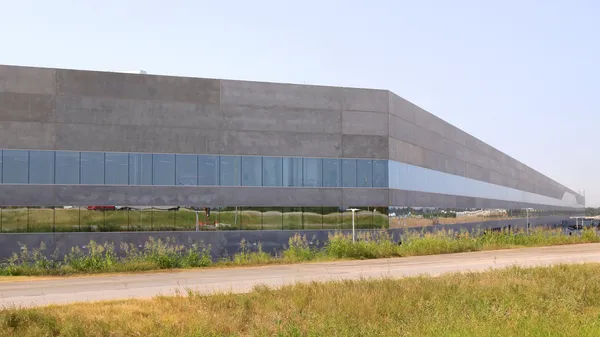
A new semiconductor project is pitched as a shared supply chain for Musk’s companies
Elon Musk used an Austin appearance on Saturday night, March 21, 2026, to announce plans for “Terafab,” a semiconductor manufacturing initiative described as a joint effort spanning Tesla, xAI and SpaceX. Musk said the project’s first step will be an advanced technology semiconductor fabrication facility in Austin, positioning Central Texas as the starting point for what he framed as an unusually large chip-building program.
The announcement arrives as demand for specialized computing hardware intensifies across multiple industries, including electric vehicles, robotics, satellite communications and large-scale artificial intelligence systems. Musk linked Terafab directly to the computing requirements of his companies, describing the initiative as intended to secure access to chips and to expand compute capacity at a scale he characterized as unprecedented.
What Musk said Terafab is designed to do
Musk said the objective is to produce the equivalent of 1 terawatt (one trillion watts) of compute power per year, with a significant portion intended for deployment in space. During the event, he also presented visuals related to a space-based compute concept, continuing a line of public discussion that envisions data-center-like capacity operating beyond Earth.
Details such as the project’s capital cost, site footprint, construction timeline, technology partners, environmental permitting pathway, and utility requirements were not fully specified in the announcement. No public document released with the event provided engineering-level specifications for power delivery, water usage, or the type of process technology node Terafab would target.
Why Austin is central to the plan
Austin has become the operational hub for several Musk-led enterprises. Tesla’s Gigafactory Texas operates in the Austin area, and the company has emphasized the site’s role as a major U.S. manufacturing base. The Terafab plan would place a chipmaking initiative alongside existing vehicle and systems manufacturing activity in the region, potentially expanding the local industrial ecosystem tied to advanced computing and automation.
Key open questions for regulators, utilities, and the region
Power and grid impact: Semiconductor fabs and AI compute facilities are energy-intensive. The announcement did not quantify Terafab’s anticipated load or identify the planned electricity supply mix.
Water and cooling needs: Chip manufacturing and high-density computing typically require substantial water and cooling infrastructure; the project’s resource plan was not detailed.
Workforce and supply chain: Advanced fabs depend on specialized labor, equipment and materials; staffing plans and vendor relationships were not disclosed.
Scope and governance: Musk described participation across Tesla, xAI and SpaceX, but did not outline ownership structure, contracting strategy, or how production would be allocated.
Terafab, as described, would combine semiconductor manufacturing with an ambition to scale computing capacity for terrestrial and space-based use—an approach that could reshape how Musk’s companies source chips if the project advances from announcement to construction.
For Austin and the broader Central Texas region, the proposal signals a potential new phase of industrial expansion tied to semiconductors and AI infrastructure, while leaving significant permitting, infrastructure and economic details still to be clarified.