Black Austin Tours spotlights East Austin’s Black heritage as displacement reshapes historic neighborhoods and institutions
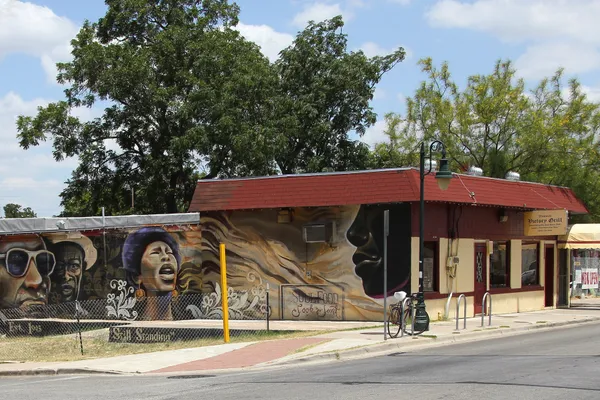
A tour company built around under-told local history
Black Austin Tours has positioned itself as a structured, interpretive way for residents and visitors to engage with Austin’s African American history—much of it rooted in neighborhoods that have experienced decades of public policy–driven segregation followed by rapid redevelopment and rising costs.
The company offers walking tours that trace Black life downtown and in East Austin, presenting a timeline that spans enslavement, emancipation-era community building, segregation, and the long arc of civic participation. Its founder, Javier Wallace, describes deep family roots in the region and has framed the project as an effort to expand the public’s understanding of who built Austin and how Black communities have navigated changing political and economic conditions.
Why East Austin is central to the story
East Austin remains one of the most consequential geographies in the city’s Black history. The city’s 1928 master planning era accelerated the concentration of Black residents and public resources in what was then described as a “Negro District,” shaping residential patterns and institutional development for generations. Sites along and near East 11th Street—churches, schools, business corridors, and cultural venues—became anchors of community life and civic leadership.
Today, tours that interpret these blocks operate in a context of continued demographic change. Displacement pressures are often discussed locally in terms of rising property taxes, escalating rents, redevelopment, and the loss of historically Black-owned spaces. In that environment, guided history programming has become one of several ways community members and cultural advocates attempt to document what remains and explain what has already been lost.
Landmarks, memory, and institutions in transition
Many of the places highlighted in East Austin’s Black history are publicly legible through institutions and designated landmarks. The George Washington Carver Museum and Cultural Center—located in a former segregated library facility—has long served as a major hub for exhibitions and community programming.
At the same time, the city’s African American Cultural and Heritage Facility has faced repeated questions about capacity, staffing, and mission clarity since opening in the 2010s, underscoring how difficult it can be to sustain cultural infrastructure even after spaces are formally preserved.
What the tours typically cover
- Downtown locations tied to early Black presence in Austin, including the era of enslavement and post–Civil War institution-building
- East Austin’s historic development after early-20th-century segregation policies reshaped housing, services, and investment
- Black business corridors and community institutions along East 11th Street and nearby blocks
- Public-space struggles, including mid-20th-century challenges to segregation in recreation and access
The tours treat the built environment—streets, former business sites, churches, schools, and public institutions—as evidence, using place-based narration to connect policy decisions to everyday life.
A living record amid rapid change
As redevelopment continues to reshape central Austin, Black Austin Tours functions as a form of public-facing documentation: a recurring, guided retelling that ties names, locations, and civic decisions to a geography still under pressure. For a city where growth often outpaces public historical understanding, the result is a structured way to connect present-day debates over displacement to specific histories embedded in Austin’s streets.