Austin Senate candidate James Talarico’s longtime North Austin church hires plainclothes security after increased attention
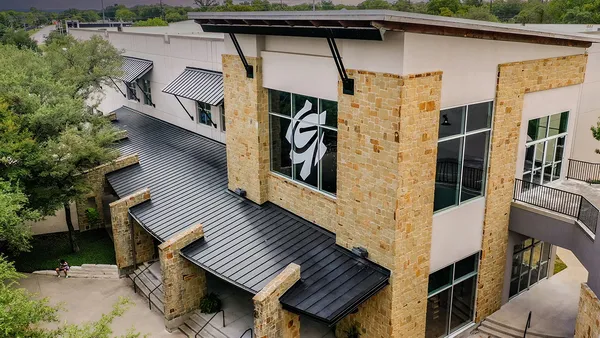
Security steps follow heightened visibility around a high-profile statewide campaign
A North Austin congregation attended for decades by state Rep. James Talarico has temporarily increased security measures after receiving heightened attention tied to his campaign for the U.S. Senate.
St. Andrew’s Presbyterian Church, where Talarico has said he has been a member since early childhood, informed congregants that plainclothes security has been hired as a precaution while church leaders evaluate additional longer-term safety steps. The church cited a rise in public attention and an increase in negative communication as factors in the decision.
What the church told congregants
In a message to members, the church’s pastor, Jim Rigby, said the campaign has brought a surge of interest in the congregation. He described much of the attention as positive while also noting the church has experienced hostile coverage and an influx of negative messages. Rigby said the church is taking the step “temporarily” and framed it as a safety measure for regular worship services and visitors.
The church said it wants congregants and visitors to be aware of the situation and emphasized that safety has become a priority as leaders consider longer-term measures.
Campaign dynamics move religion into the foreground
Talarico, a Democrat who represents a Central Texas district in the Texas House, has made faith a prominent part of his political identity. His approach has also made religion an early point of contention in the Senate contest, as political opponents and allied groups have circulated clips and past remarks to characterize his theology and values as outside the mainstream.
In Texas, where religious language plays an outsize role in campaign messaging across parties, a candidate’s public faith can be both a mobilizing tool and a target for political attacks. That dynamic has increasingly extended beyond the candidate to institutions associated with them, including churches where sermons, guest appearances, or long-term membership histories can be amplified through partisan channels.
What is known—and what is not
The church confirmed it has hired plainclothes security on a temporary basis and is considering additional safety measures.
The church attributed the decision to increased attention and a rise in negative communications.
Talarico’s campaign declined to comment on the church’s security decision.
No public details have been provided about specific threats, the scope of the security deployment, or how long the temporary measures will remain in place.
Broader implications for public institutions and civic life
Houses of worship often function as community hubs—hosting services, children’s programs, outreach efforts, and events open to the public. When a congregation becomes tied to a high-profile political narrative, leaders can face pressure to balance openness with practical security concerns. St. Andrew’s decision underscores how contemporary campaign scrutiny—especially when religion is central to political branding—can create operational challenges for community institutions that are not political organizations but can be pulled into political conflict.
For now, the church has characterized the changes as precautionary and temporary while it assesses what, if anything, should change permanently.