Austin revises homeless encampment clearing strategy after October surge, focusing on shelter access and coordination
A post-October reset for encampment management
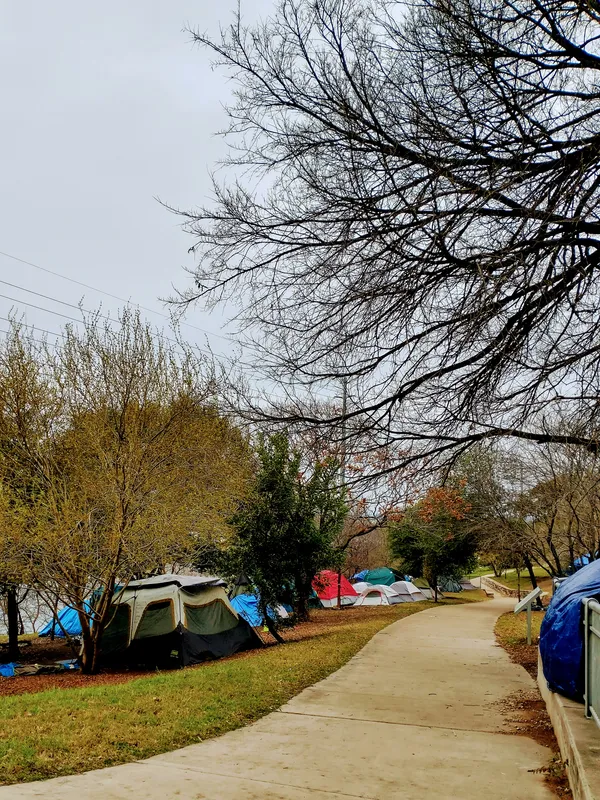
Austin officials are adjusting how the city clears homeless encampments after a three-week surge effort in late October and early November 2025 tested staffing, shelter capacity and interagency coordination. The initiative, launched Oct. 20 and concluded Nov. 8, was designed to prioritize encampments considered high-risk for life-safety hazards such as active roadways and flood-prone areas, while offering connections to shelter and services before seasonal weather threats intensified.
During that operation, city teams addressed 669 encampment locations across Austin. Outreach teams contacted roughly 1,200 people and moved 181 individuals into shelter, while another 87 received referrals to social, medical or behavioral health services. City reporting also shows that 71 citations were issued and 22 arrests were made, largely tied to outstanding warrants. The operation’s cleanup component removed roughly 1.35 million pounds of debris from public land.
What the October surge revealed
City reporting and subsequent council discussions highlighted persistent constraints that limited how many people could accept shelter offers. Barriers included the availability of placements suitable for couples and people with pets, along with the practical challenges of moving people from dispersed sites quickly while preserving access to belongings, medications and ongoing care.
At the same time, the city’s effort unfolded alongside a separate state-led enforcement operation announced Oct. 21, 2025. State agencies reported clearing dozens of encampments on or around state property and making arrests, a dynamic that complicated planning for outreach and shelter placements when operations were not formally coordinated.
How the strategy is changing
Following the surge, Austin is shifting back to a regular encampment management cadence while incorporating process changes aimed at reducing disruption and improving outcomes. The city has moved toward more standardized outreach and coordination practices, including clearer pathways for how encampment-related referrals feed into the shelter system, and a broader emphasis on aligning abatements with available shelter slots and service navigation.
Budget decisions for fiscal year 2025–26 also indicate a focus on adding capacity and staffing to support these adjustments. City-adopted spending includes funding for additional outreach and encampment management positions and continued shelter operations, reflecting a strategy that ties encampment work more closely to the shelter and services pipeline.
Key operational elements now emphasized
- Prioritizing sites with imminent safety risks, including areas vulnerable to flooding, traffic exposure or wildfire hazards.
- Coordinating shelter intake more tightly with city-led encampment actions so outreach offers can translate into available beds.
- Strengthening cross-department execution so cleanups, outreach, health response and public-works restoration occur in a sequenced, predictable manner.
- Expanding transparency and public tracking tools discussed by council to clarify how sites are prioritized and what outcomes result.
A comprehensive after-action review of the October–November initiative has been planned for presentation to the mayor and City Council, with the stated purpose of capturing performance metrics and lessons learned to guide future operations.
What comes next
Austin’s revised approach signals that future encampment clearings will be judged not only by how quickly public spaces are restored, but also by whether outreach can reliably connect people to shelter and stabilizing services. With ongoing funding pressures and fluctuating shelter availability, the city’s next test will be whether tighter intake coordination and added outreach capacity can improve placement rates during high-priority abatements.