Austin protests intensify over ICE activity and police cooperation, raising questions about city and federal roles
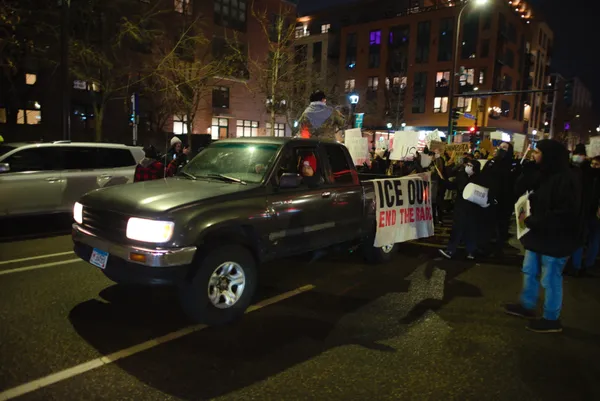
Protesters target enforcement tactics and local cooperation
Demonstrations against U.S. Immigration and Customs Enforcement have intensified in Austin as immigrant-rights advocates push city leaders and law enforcement to limit cooperation with federal immigration operations. Recent rallies have focused less on federal policy debates and more on the practical mechanics of enforcement: how arrests are triggered, what information is shared, and what role local agencies play when immigration authorities act in Central Texas.
On Jan. 20, 2026, protesters gathered outside Austin City Hall to call for changes in how the Austin Police Department interacts with ICE. Advocacy organizations delivered a petition with more than 10,000 signatures to city officials seeking restrictions on APD assistance tied to administrative immigration warrants. City officials, including Mayor Pro Tem Vanessa Fuentes, accepted the petition at City Hall as participants chanted and held signs calling for reduced collaboration.
Administrative warrants at the center of dispute
A major point of contention has been the use of administrative warrants—documents issued within the federal immigration system rather than by a judge. Advocacy groups argue that treating these warrants as a basis for local involvement can increase the risk of detention and deportation following routine police contact, including calls for emergency assistance.
Organizers framed the demand as a public-safety issue, arguing that fear of immigration consequences can discourage residents from contacting law enforcement or emergency services.
The debate has sharpened in the wake of a widely discussed Jan. 5, 2026 incident in which an Austin resident and her child were detained after a 911 call, later resulting in deportation. Protest speakers cited the case as an example of how immigration enforcement can intersect with municipal systems in ways that residents may not anticipate.
Rumors, denials, and a climate of uncertainty
In late January, social media rumors about imminent large-scale ICE activity spread rapidly in Austin, including claims of agents staging at local hotels during a winter weather event. City leadership publicly disputed that there was evidence of a coordinated enforcement surge tied to warming shelters or mass hotel staging. The episode underscored how quickly fear of enforcement can circulate—and how difficult it can be for residents to distinguish confirmed operations from speculation in real time.
Law enforcement presence extends beyond city police
While protesters have concentrated on APD policy, advocates have also pointed to the role of state law enforcement. Texas Department of Public Safety involvement at immigration-related demonstrations has drawn scrutiny, particularly after earlier January protests in downtown Austin where chemical irritants were reported and arrests were made as crowds moved through the city near federal facilities.
Advocates are demanding clearer boundaries for APD interactions with ICE and stricter rules on responding to administrative warrants.
City officials have faced pressure to clarify what they can control locally versus what falls under federal authority.
State law enforcement actions at protests have added another layer to the confrontation over immigration enforcement in Texas.
As organizing continues, the core dispute remains procedural and jurisdictional: how immigration enforcement is initiated, which agencies are involved, and what safeguards exist when local public services intersect with federal detention and deportation mechanisms.