Austin police detail why no active-shooter alert was sent during the March 1 Sixth Street attack
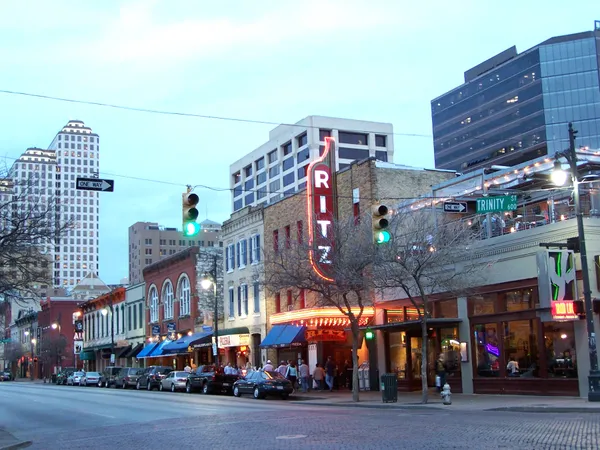
What happened on West Sixth Street
Austin police say the shooting on West Sixth Street unfolded in a matter of minutes early March 1, 2026, beginning outside Buford’s Backyard Beer Garden at 700 West Sixth Street. Investigators say a black Cadillac SUV pulled alongside the crowded area and the driver fired a pistol into people gathered outside. The vehicle then continued westbound, parked near West Sixth and Wood streets, and the suspect exited holding a rifle.
Police say officers and Austin-Travis County Emergency Medical Services reached the scene within 57 seconds of the first 9-1-1 calls, began moving bystanders away from the immediate danger and rendering aid, and then located the gunman near West Sixth Street and West Avenue. Police say the suspect fired toward officers, three officers returned fire, and the suspect was pronounced dead at the scene.
Authorities later identified the suspect as 53-year-old Ndiaga Diagne. Police say 19 people, including the suspect, sustained injuries in the incident. Two victims, Savitha Shan, 21, and Ryder Harrington, 19, were pronounced dead at the scene. A third victim, Jorge Pederson, 30, died at a hospital on March 2, 2026.
Why residents did not receive an “active shooter” phone alert
In the days after the attack, questions centered on why many people did not receive a mass “active shooter” alert on their phones while the shooting was underway. The statewide system is designed for situations where there is a verified active shooter and an identifiable last known location, and where sending an alert is expected to help people near the threat take protective actions such as avoiding an area or sheltering in place.
In this case, police officials have described the event as an “active attack” that was brought to an end rapidly once officers confronted the suspect. In public briefings following the shooting, authorities said there was no longer an ongoing threat to the public by about 2:30 a.m. The operational reality of a fast-moving event—where the attacker’s location and direction were changing from block to block—can complicate the decision to send a mass alert that depends on a clear, current “last known location.”
What officials say about alerts, safety zones and communication
Police have released a detailed incident timeline and multiple audio and video files, including 9-1-1 calls, radio traffic and body-worn camera footage, as part of required public disclosure for critical incidents. Officials have said some material was redacted to comply with state law and to protect the integrity of the continuing investigation.
The Federal Bureau of Investigation is investigating the incident as a potential act of terrorism, and police have said they are withholding the names of the officers who shot the suspect while that federal investigation continues.
- Police say the initial shots were fired from a vehicle, followed by rifle fire after the suspect exited the SUV.
- First responders reached injured people within minutes and began coordinated triage and transport.
- Authorities say the threat ended after the suspect was engaged by officers near West Avenue.
Key remaining questions include how officials assess when a targeted, fast-evolving attack meets thresholds for mass public alerts, and how public-warning tools can be used without broadcasting uncertain locations in real time.
What comes next
The criminal review of the officers’ use of deadly force has been closed by the Travis County District Attorney’s Office, with no charges filed. Separately, police have said they initiated parallel administrative and criminal investigations immediately after the shooting, and that the federal inquiry into motive and possible terrorism indicators remains ongoing.
As investigators continue reviewing evidence and released recordings, the city faces continued scrutiny over how it balances rapid tactical response with timely public communication during emergencies in Austin’s busiest nightlife corridors.