Austin Marathon weekend brings staged downtown street closures and major detours beginning Friday morning
Race weekend schedule expected to reshape mobility across central Austin
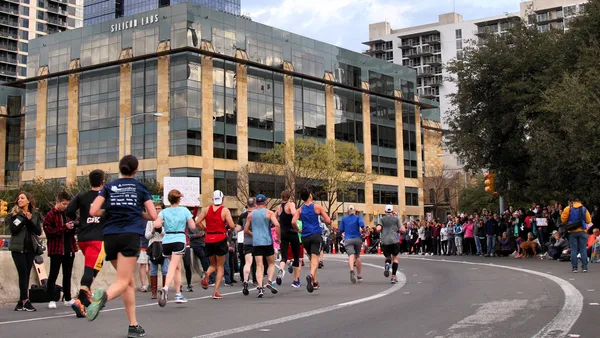
Austin is preparing for significant traffic disruption as the Ascension Seton Austin Marathon, Half Marathon and 5K take place on Sunday, Feb. 15, 2026. The event is scheduled to run from 7 a.m. through mid-afternoon, with closures beginning earlier in the weekend for staging and course preparation.
City event listings for the marathon indicate the main event window runs Sunday morning through 3 p.m., while transportation planning materials warn that vehicle crossings of the race course will be limited and controlled at major intersections based on runner density and safety conditions.
Timeline: closures start Friday, expand Saturday, peak early Sunday
Downtown restrictions are expected to roll out in phases:
Friday, Feb. 13: Closures begin in the downtown core, including portions of Ninth Street between Colorado and Brazos and a segment of Congress Avenue between Seventh and 11th streets starting in the morning. Additional closures affecting Eighth and 10th streets between Colorado and Brazos begin later in the day.
Saturday, Feb. 14: The same downtown blocks remain under restrictions, with a wider early-morning footprint expanding on Congress Avenue and additional downtown streets affected for setup. Several nearby cross streets are expected to remain open during parts of Saturday, though access patterns can change as staging builds.
Sunday, Feb. 15 (race day): Early closures are expected to begin around 2 a.m., with the race route closed by approximately 6 a.m. Reopenings typically occur progressively as runners clear segments and crews remove barricades, with downtown access constrained into the early afternoon.
What drivers should expect: limited crossings and uneven access blocks
Transportation guidance for marathon day emphasizes that crossing the course by car can be difficult and is generally discouraged. Crossings may be permitted at major intersections when there are no runners present, but those windows can be short and unpredictable. For many residents, the practical impact is not only closed streets but also isolated “pockets” where local access is possible from one side while the opposite side remains blocked.
Drivers should plan routes that avoid crossing the marathon course and expect detours and shifting access as the race progresses.
Detour corridors and alternatives
Planning materials identify several corridors that are expected to remain unobstructed for cross-town travel, including MoPac, North Lamar Boulevard and I-35 for north-south movement, and Ben White Boulevard, U.S. 290 and FM 2222/Koenig Lane for east-west travel. Transit riders should also anticipate detours on bus routes serving downtown.
Organizers and city materials also advise “parking strategically” on the accessible side of the course and completing the last portion of a trip on foot when a destination sits near the route.
Parking enforcement and access considerations
Neighborhood “no parking” restrictions are expected to be enforced where posted near the route. Downtown garages typically promoted for major events include facilities near the Convention Center, City Hall and other central locations, though drivers should anticipate that the ability to enter or exit a garage may depend on which surrounding streets are open at a given hour.