Austin City Council backs six proposed affordable developments seeking competitive 9% tax credits in 2026 cycle
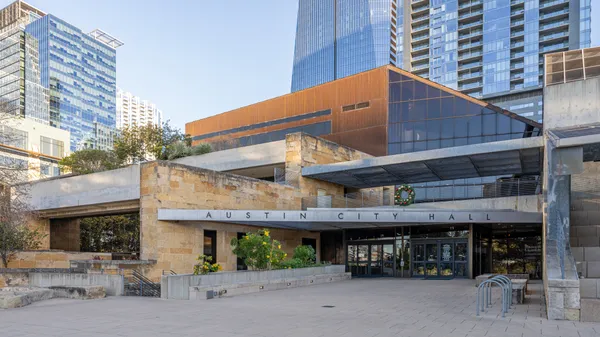
City resolutions position projects for state-run competition that typically culminates in July awards
Austin City Council has approved resolutions supporting six proposed affordable housing developments as they pursue competitive 9% Low-Income Housing Tax Credits (LIHTC) in the 2026 application cycle. The resolutions are a threshold requirement in the process: developers must secure local support before submitting applications to the Texas Department of Housing and Community Affairs (TDHCA), the state agency that awards the credits.
The 9% LIHTC program is a federal incentive administered through states and used to finance new construction or rehabilitation of rent-restricted housing. TDHCA’s governing board makes final award decisions, and 9% applications are typically considered for approval in July. In the Austin region—TDHCA Region 7—an expected 2026 allocation of up to $7,164,653 was cited as potentially sufficient to fund three to four developments, meaning not every locally supported proposal is likely to receive credits.
Projects span multiple districts and focus on long-term rent restrictions
The city’s supported proposals include four new-construction communities and two rehabilitation efforts described as “at-risk” set-aside senior projects. Together, the projects are presented as totaling more than 400 units across five council districts, with rents restricted to households at specified percentages of Median Family Income (MFI) for decades if credits are awarded. While the minimum affordability period referenced for tax-credit projects is at least 30 years, developments commonly elect longer terms such as 40 or 45 years.
Rowen Vale (District 9, 206 E. Annie St.): Proposed 75-unit multifamily development near the planned Austin Light Rail Phase 1 alignment. Unit affordability targets range from 30% to 80% MFI.
The Lenora (District 5, 4507 Menchaca Rd.): Proposed 39-unit community near high-frequency transit, with a stated 45-year affordability period and units targeted from 30% to 80% MFI.
The Maven (District 4, near 618 E. Highland Mall Blvd.): Proposed 80-unit development planned with one- and two-bedroom units, including accessibility features for residents with mobility and sensory impairments. Affordability targets include 30% and 50% MFI.
Sunflower Apartments (District 4, 601 W. Braker Ln.): Proposed 80-unit development with one-, two-, and three-bedroom units and a stated 40-year affordability period; structured around a long-term ground lease arrangement. Units targeted from 30% to 60% MFI.
Chateauglen (District 4, 13500 Metric Blvd.): Proposed rehabilitation of 105 senior units under an at-risk set-aside. Affordability targets include 30%, 50%, and 60% MFI.
St. George’s Court (District 4, 1443 Coronado Hills Dr.): Proposed rehabilitation of 60 senior units under an at-risk set-aside. Affordability targets include 30%, 50%, and 60% MFI.
What the council vote does—and does not—decide
The resolutions signal local alignment with Austin’s housing goals and enable developers to compete for credits. They do not, by themselves, provide financing or constitute final construction approval. The TDHCA scoring and board decisions determine which proposals receive the 9% credits, and awarded developments generally proceed through additional design, permitting, and financing steps before delivery.
LIHTC awards can cover a substantial share of development costs and are often the central funding tool used to make rents affordable to lower-income households.
If awards are made on TDHCA’s typical schedule, successful applicants would move next into closing and construction phases, with project delivery commonly occurring within roughly two years after awards.