Austin business leaders respond as sexual abuse allegations fuel calls to rename Cesar Chavez Street downtown
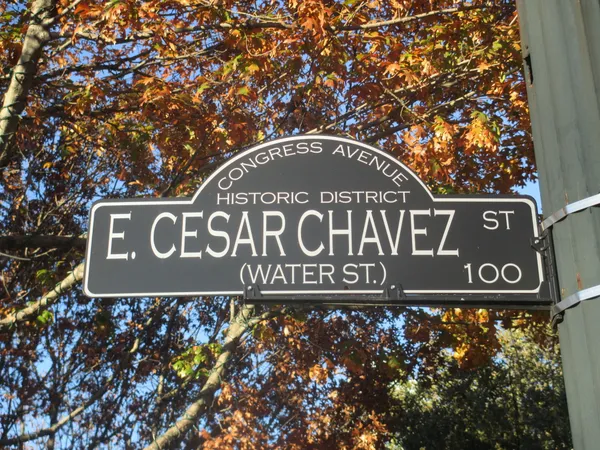
What is being proposed
A new push to change the name of César Chávez Street in Austin is drawing heightened attention from downtown business and civic leaders after widely reported sexual abuse allegations involving the late labor organizer César Chávez emerged in March 2026. The discussion centers on whether a major downtown corridor should continue to bear Chávez’s name and, if not, how the city would manage a renaming process that affects residents, employers, visitors and public institutions.
Why the street name matters to downtown commerce
César Chávez Street functions as a key east–west route through the urban core, intersecting major north–south corridors and serving as an address marker for hotels, offices, cultural destinations and public facilities. For businesses, the street name is embedded in customer directions, delivery routing, legal filings, marketing materials and digital maps. A change can trigger administrative and logistical work, even when the physical location remains unchanged.
At the same time, downtown organizations frequently rely on place names to communicate identity and history. Any decision to keep, revise or replace the name carries consequences for how Austin presents itself to residents and to out-of-town visitors, particularly in a district that is already managing rapid growth, construction disruptions and changing mobility patterns.
Background: how Austin got César Chávez Street
The roadway now known as César Chávez Street has carried multiple names over time. Historical records indicate it was once identified as “Water Avenue,” reflecting its proximity to the Colorado River, before being renumbered as First Street during the late 19th century. In 1993, Austin renamed East First Street to East César Chávez Street, adopting the current honorific shortly after Chávez’s death.
What changed in March 2026
In mid-March 2026, the United Farm Workers publicly distanced itself from tributes honoring Chávez, citing troubling allegations of abuse involving young women and possibly minors, and encouraging communities to shift away from the customary celebratory format. The reassessment quickly broadened beyond labor groups: cities and civic organizations in multiple states began reconsidering events and honors associated with Chávez, including street names and commemorations tied to his birthday.
How a renaming could proceed
Austin has established mechanisms for petitions and for processing public requests to revise city actions. Separately, street-name changes typically involve coordination among city departments, emergency services, mapping providers and affected property owners. Practical issues include transition timelines, address updates, and ensuring continuity for navigation and public safety.
Verification and public process: formal submissions may require review and verification steps, depending on the pathway used.
Operational impacts: updates may be needed across city signage, permits, business records and digital mapping systems.
Community implications: naming decisions often intersect with how Austin recognizes Latino heritage and local civil-rights history.
Any final action would require a documented city process balancing administrative feasibility, public input and the significance of the honor being granted or withdrawn.
The debate now unfolding downtown is expected to focus on clear implementation details, measurable costs and timelines, and the criteria the city uses when honoring historic figures in public spaces.