Amazon-owned Zoox expands driverless vehicle testing to Austin as robotaxi competition intensifies in Central Texas
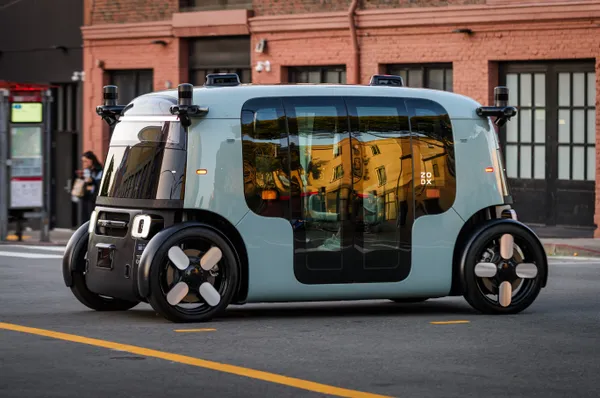
What is arriving in Austin
Zoox, the autonomous-vehicle company owned by Amazon, has expanded its on-road operations in Austin as part of a broader push to scale toward a commercial robotaxi business. In Austin, the company is using a test fleet to collect driving data and validate its automated driving system in real traffic conditions, adding the city to a growing list of U.S. metros where Zoox is building operational readiness.
The Austin work centers on testing rather than a broad, open-to-the-public passenger service. Zoox has also used controlled-access ride programs in other cities, offering rides to select participants as the company gradually increases the scope of operations.
How Zoox’s approach differs from other robotaxi models
Zoox is developing a purpose-built robotaxi designed for fully autonomous operation, rather than adapting a mass-market vehicle. The design is notable for omitting traditional human-driver controls typically found in consumer cars. That vehicle concept has drawn attention because U.S. auto safety rules were written around human-driven features, creating a regulatory and compliance challenge for purpose-built autonomous shuttles.
Alongside that long-term goal, Zoox has relied on more conventional test vehicles in multiple cities to build maps, refine its software and expand operational coverage before deploying purpose-built robotaxis more widely.
Regulatory backdrop in Texas
Texas provides a statewide framework for automated vehicles, including expectations tied to commercial driverless operation and how emergency responders should interact with autonomous vehicles. State rules include documentation and planning requirements intended to ensure that law enforcement, fire and EMS personnel can safely manage roadside interactions involving driverless systems.
Why Austin matters now
Austin has become one of the most visible U.S. markets for autonomous ride-hailing, with multiple companies using the city to validate technology and operations. That makes local roadway behavior, construction patterns and traffic mix strategically valuable for testing systems intended to operate without a human driver.
Zoox’s timing also coincides with rapid robotaxi expansion elsewhere in Texas. In recent months, other services have announced new Texas metros and increased ride volumes, putting pressure on competitors to demonstrate progress not only in software performance but also in fleet operations, safety processes and regulatory readiness.
What to watch next
Testing footprint: whether Zoox expands the Austin operating area or increases the number of vehicles on public streets.
Transition milestones: when Zoox shifts from data-gathering tests to broader rider access programs in Austin.
Commercial readiness: how quickly Zoox can scale manufacturing and operations to support a sustained robotaxi service.
Safety and oversight: how the company addresses vehicle-design questions tied to federal safety standards for nontraditional autonomous vehicles.
For Austin residents, the near-term impact is likely to be incremental: more autonomous test vehicles on city streets, followed by limited-access rider programs before any wider public rollout.